
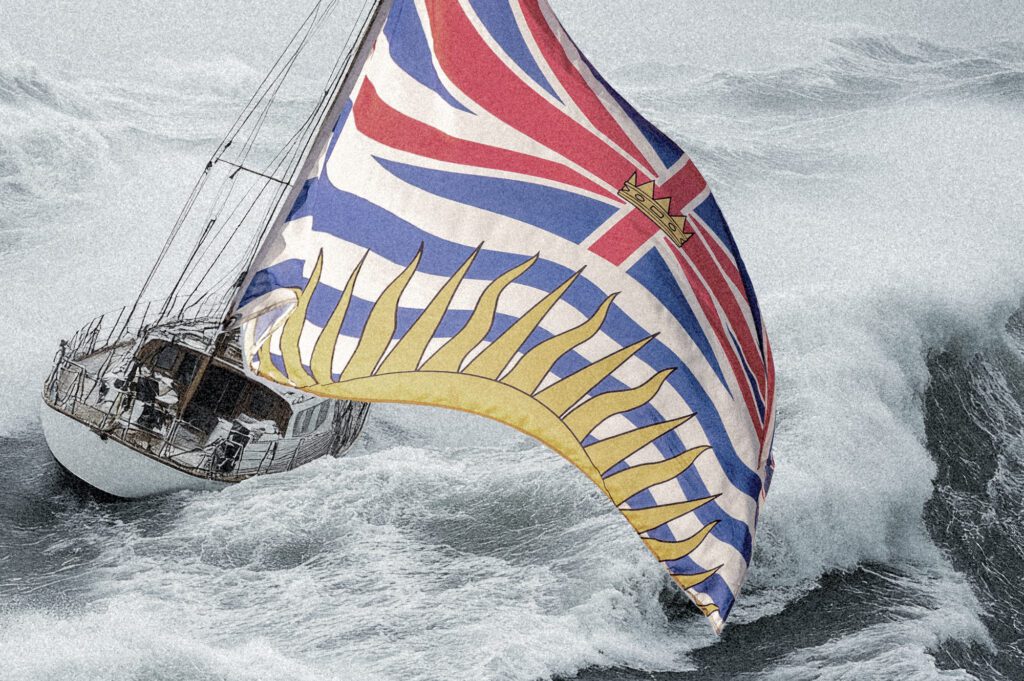
The spring session of the B.C. Legislature was delayed following the devastating shooting in Tumbler Ridge. In the immediate aftermath, NDP, Conservative, and Green MLAs set partisan politics aside to focus on supporting survivors, families, and the broader community. The Legislature ultimately convened the following week on Budget Day, February 17, launching a session that has since been defined by several politically complex and high-stakes issues, most notably, court decisions challenging mineral tenure rights and private land title across the province.
Concurrently, the Conservative Party of B.C. is entering the final days of a leadership race in which Aboriginal title and reconciliation have emerged as defining issues, with all five leadership candidates pledging to repeal the BCNDP’s landmark Declaration on the Rights of Indigenous Peoples Act. This underscores the growing political divide over the province’s approach to Indigenous relations, resource development, and regulatory certainty.
Before heading out for summer, Premier David Eby was able to secure the passage of legislation enabling the province to invest directly in private-sector companies through a new $400 million Strategic Investment Fund. The measure gives the provincial government the authority to provide financing or acquire equity stakes in B.C.-based companies, signalling a more interventionist economic approach as the government seeks to position itself as an active partner in strategic sectors of the provincial economy.
On the Summer Circuit—What’s next
Heading into this regrouping season, Premier Eby and the BCNDP face an uphill battle. Even as the BC Conservatives have been leaderless, and not without their own internal controversy, the NDP still find themselves 10-points behind the BC Conservatives as of April according to Angus Reid. The handling of DRIPA has been the largest factor on the Premier’s approval rating as it hit an all-time low at 33 per cent, down nearly 20 per cent since its peak in February-April 2025. This remains the only recent poll on the topic, so it will be interesting to track this sentiment throughout the summer.
The Conservative Party of BC will elect their new leader on Saturday following a grueling 180-day campaign that saw twists and turns at every opportunity. Following this, we expect a summer of regrouping and alignment behind the new leader, an extensive touring element which is guided ultimately by an election readiness program to prepare to take on a government that is on their back foot.
A session to remember…or one to forget
The spring session is likely one Premier David Eby will be relieved to put behind him, as the past four months exposed the government to sustained political pressure on multiple fronts. Beginning with the provincial budget on the first day of the session, which forecasted a $13.3 billion deficit, the government faced criticism not only from economists, business organizations, and industry leaders, but also from several long-standing allies within the NDP coalition. Concerns around fiscal management, economic competitiveness, and the province’s investment climate created an unusually broad spectrum of criticism for the government early in the session.
At the same time, the NDP’s slim majority in the Legislature contributed to an ongoing sense of political uncertainty as the government navigated a series of contentious files. Debate surrounding the potential suspension of the Declaration on the Rights of Indigenous Peoples Act (DRIPA) exposed divisions within caucus and highlighted broader tensions around reconciliation, resource development, and regulatory certainty. To reset the discussion around the topic and show his government was acting with authority, Premier Eby briefly suggested making the vote tied to the DRIPA debate a matter of confidence. The move was quickly withdrawn after members of his own caucus publicly opposed him, causing the government to hold off and pause the legislation. Had the confidence vote proceeded and failed, it could have triggered an early provincial election. While speculation around a snap election persists in political circles, it’s unlikely in the near term.
Externally, tensions also continued to mount over British Columbia’s role in the building of Alberta’s desired pipeline. While Premier Eby has maintained his opposition to a northern oil pipeline, aligning himself with Coastal First Nations opposed to such projects, he has notably softened his broader tone regarding B.C.’s participation in national energy discussions. The Premier’s current position is aimed at ensuring British Columbia is meaningfully consulted and appropriately compensated should the province play a larger role in future national energy infrastructure discussions.
With all this happening, the government was able to make progress on some priorities, including those set out in the Look West Strategy which was released in November 2025. When it comes to natural resources, B.C. has made an effort to approve clean energy, mineral and natural gas major projects faster to create jobs and grow the economy.
Following the tragedy in Tumbler Ridge, artificial intelligence and online safety was vaulted back to the forefront of the provincial agenda. In response, Premier Eby and Attorney General Niki Sharma renewed calls for stronger online safety measures, particularly around platform accountability, harmful content moderation, and digital communications oversight. The discussion signals a growing expectation from government that online platforms and technology companies take a more proactive role in public safety and content governance.
The complex federation of Canada
While there was a period of time that the First Ministers of the country looked like they were coming together as a nation to combat the threat of the U.S. trade tensions, which remain still, the relationship between Premier Eby and Alberta Premier Danielle Smith continues to be stressed. The tensions remain focused on the prospect of a new pipeline to carry more Alberta oil to BC’s coast and on to new markets. While there has been some softening of positions, based on ensuring BC is involved in discussions that affect the future of its citizens and lands, and that the province can benefit from any potential projects adequately, Premier Eby pulled no punches at a recent meeting of Western Premiers. The BC Premier took on Premier Smith’s decision to put forward a referendum question about separation in the fall, questioning why the premiers were meeting in a province to talk cooperation when the leader of that province is testing separation at the worst time possible. He went as far as calling Premier Smith a “separatist premier”.
The Premier also took aim at Prime Minister Carney, saying he flew to Alberta to meet with Premier Smith and gave her everything she wanted, while BC does not benefit from the same level of attention or concessions from the Prime Minister. This comes a week after the PM took a staunch position during a speech to the Greater Vancouver Board of Trade, stating the world is in an energy crisis and if B.C. continues to stand opposed to more energy development, the federal government will “be spending more time elsewhere in the country”. Premier Eby criticized the PM for rewarding Smith’s “bad behavior” by adjusting down the industrial carbon tax regime in Alberta while B.C. continues to price it into their business.
Conservative Party of BC update
The Conservative Party of BC (CPBC) has been focused on both holding the NDP Government to account as the Official Opposition and conducting a leadership race to replace former leader John Rustad. Currently, over 23,000 registered party members have voted for one of the race’s remaining five candidates; Iain Black, Peter Milobar, Kerry-Lynne Findlay, Caroline Elliot, and Yuri Fulmer. Throughout the campaign, all leadership contestants have indicated they are confident they can win the leadership race. Members have voted online via ranked ballot since May 23. Currently, the leadership race is projected to go beyond the first vote when the leader is decided on May 30.
Under interim leader Trevor Halford, the CPBC has focused on targeting the NDP on core issues, namely uncertainty around private property rights and DRIPA, healthcare reform, public safety, affordability, and economic investment. Despite some chaotic periods as opposition, Halford recently emphasized that he is proud of the work he and his caucus have done over the past session. He went on to state that he looks forward to throwing his full support behind whoever is chosen as the next leader on May 30.
After the new leader is chosen on May 30, the priority of the party will shift to transitioning the new leader and their personnel into their roles, building relationships with caucus and determining election readiness and next steps. Much of the party’s political priorities will be determined by whoever wins the leadership race, but the summer will be a time of transition to make sure the new leader and the party are ready for the resumption of the legislature this Fall.