
Written by: Liam O’Brien
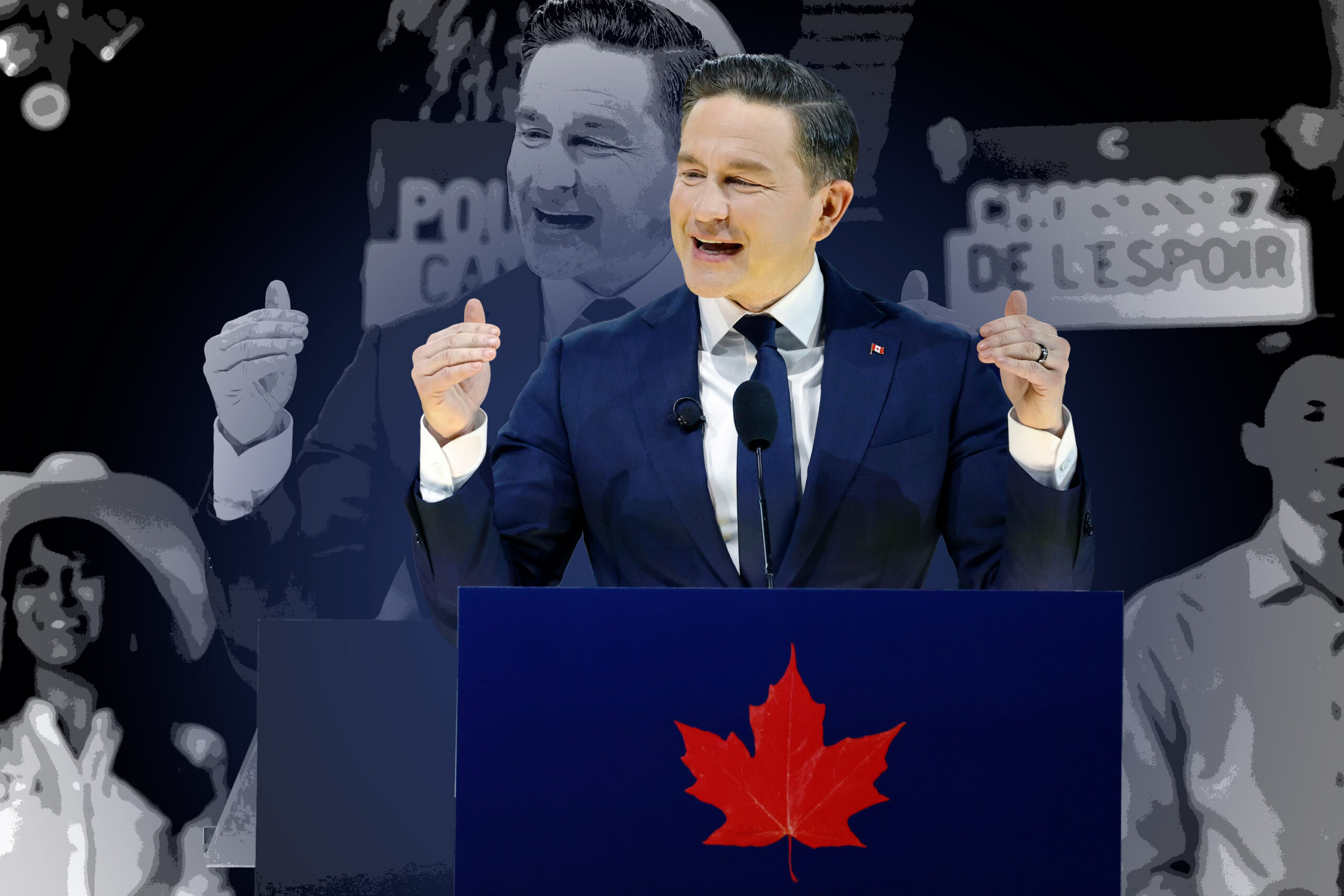
At the end of January, some 2,700 Conservative delegates came from across the country to convene in Calgary, elect the party’s national council, vote on constitutional amendments and policy resolutions, and vote in the mandatory post-loss leadership review.
A robust 87.4% of the delegates voted for Pierre Poilievre to stay on as leader. The result eclipses Stephen Harper’s convention leadership review result of 84% in 2005. This was not a surprise for attendees, most of whom were predicting a result somewhere near 80%. Delegate selection occurred in October and November 2025. There was no organized effort against Poilievre and riding delegations were mostly comprised of party stalwarts who continue to back Poilievre.
The party’s national council had contested National Council races for the council seats representing British Columbia, Saskatchewan, Ontario, Quebec and New Brunswick.
Leadership
It was observed by commentators that the ballot question was phrased in a positive way, which would not align with the technical post-loss requirement. However, this was not an issue for delegates at the convention. In addition to delegates, some 500 observers/media/alternates also attended the convention site (BMO Centre).
Poilievre faced not only the party’s loss of last year’s election, but also the loss of his own seat. After winning a by-election in Battle River–Crowfoot, Poilievre pushed into the fall sitting of the House of Commons facing two defections and a resignation from his caucus. Despite no detectable effort to organize delegate slates to challenge Poilievre’s leadership, his leadership was at least considered a push factor for CPC MPs who decided on crossing the floor. Conservative MPs were targeted and courted by the governing Liberals with an aim to securing a majority in the House of Commons. Some observers believe at least one more floor crossing may occur. As of the writing of this brief, that crossing has not occurred. In any case, the handful of crossings that did materialize did not appear to have influenced or affected Conservative Convention delegates.
Keynote speech
Poilievre’s main speech included his usual priorities:
- Building and strengthening Canada’s economy by repealing select laws of the Trudeau era and green lighting many major projects;
- Affordability – including housing affordability, tax relief and fiscal disciple to reduce inflation.
- Tackling crime – including promising to strengthen Canadians’ right to defend themselves in their own home and ensuring convicted violent offenders stay incarcerated longer.
Poilievre’s keynote included many other subjects: reform/strengthening of the armed forces, immigration enforcement, defunding the CBC, addiction treatment and Arctic sovereignty.
Beyond policy there was a notable softening of tone. Poilievre became emotional at times when he was talking about his family. While he still took plenty of shots at the Carney Liberal government, they were balanced with a lot more discussion of both examples of how Canadians face various hardships and some talk of his vision for the future. Channeling Ronald Reagan, he consumer tested the question: “Are you better off today?”
Policy and constitutional amendments
As part of the usual convention business, delegates could attend one of four breakout sessions to discuss resolutions prioritized regionally in the months leading up to the convention. One session was dedicated to proposed amendments to the party’s constitution, while the other three sessions were organized by theme to amend the policy’s non-binding policy declaration document. Resolutions passed by these breakout sessions proceeded to either the Constitutional Plenary or the Policy Plenary for final consideration.
Policy resolutions included many in alignment with the 2025 Conservative platform as well as speeches and bills from Poilievre and CPC caucus members. These included support for a trans-Canada energy and electricity corridor, mining and refineries. There were also policies passed on criminal justice supporting the home defense castle doctrine (use of force up to and including lethal force to defend one’s home) and deportation of immigrants who commit violent offences. The more controversial policy resolutions that made it to the convention were defeated. Resolutions calling for the line in the party’s policy declaration stating Conservative governments will not legislate on abortion to be removed was defeated in the breakout session stage, as was the resolution calling for Canada to withdraw from world organizations including WHO. At the plenary session a resolution attacking the Liberal Government’s conversion therapy ban was defeated.
Most of the constitutional amendments presented to the convention were designed to entrench processes related to candidate nominations. These amendments were born out of widespread frustration and irritation caused by the appointment of nearly 100 CPC candidates in the lead up to the 2025 election, including in many cases appointments over declared and vetted contestants. Most of these amendments were defeated at the constitutional breakout session.
Of the amendments that passed, these are notable:
- After any future election loss, the party’s National Council will now have to conduct an election post-mortem and share the report with the party’s membership. Several delegates noted that this sort of exercise after the 2025 election would have likely prevented many of the large number of amendments on nominations.
- The party office will now be compelled to publish a complete nomination schedule with timelines for each Electoral District Association. They will also have to share each nomination contestant’s nomination “package” with the local association’s nomination committee. Delegates opposed to this amendment were concerned that prospective candidates may be reluctant to submit the detailed application knowing sensitive personal information may be shared beyond the party officials. There was also concern expressed about how a rigid schedule could tie the party’s hands on timing nominations to ensure the best contestants can participate.
- Some incumbent MPs also successfully pushed for an amendment stating that only their district associations or their caucus mates could disallow them as candidates. Opponents to this resolution expressed concerns about how this could make it difficult to revoke the candidature of an individual candidate who has said or done something that would be counter to the party’s principles.
What’s next?
Conservatives will have to see if there will be a final crosser to the Liberals. The party’s strong endorsement of Poilievre could be used as part of a crosser’s rationale to finish their careers on the Liberal side and possibly give them a majority government. There was also a lot of discussion about the possibility of Prime Minister Carney seeking that majority through a winter/spring election call. The rationale would be that as time goes on, the economic conditions and unknown level of progress in addressing U.S. tariff pressures could mean the governing Liberals will be less popular as the year progresses.
Poilievre may also be slowly signaling some tone and strategy changes. There was a more positive and sensitive tone in much of his convention keynote speech. Key caucus members from Poilievre’s leadership team were prominently featured throughout the event, involved in addressing, chairing and participating in the sessions. MPs like Deputy Leader Melissa Lantsman and Quebec Lieutenant Pierre Paul Hus were center stage at some events. Showcasing more of the team is one way to move past the style and image presented in the last campaign.
While the PC Party of Ontario scheduled their convention on the same weekend as the federal party, there have recently been more positive talks and coordination between Poilievre and Premier Doug Ford.