
Written by Geoff Norquay.
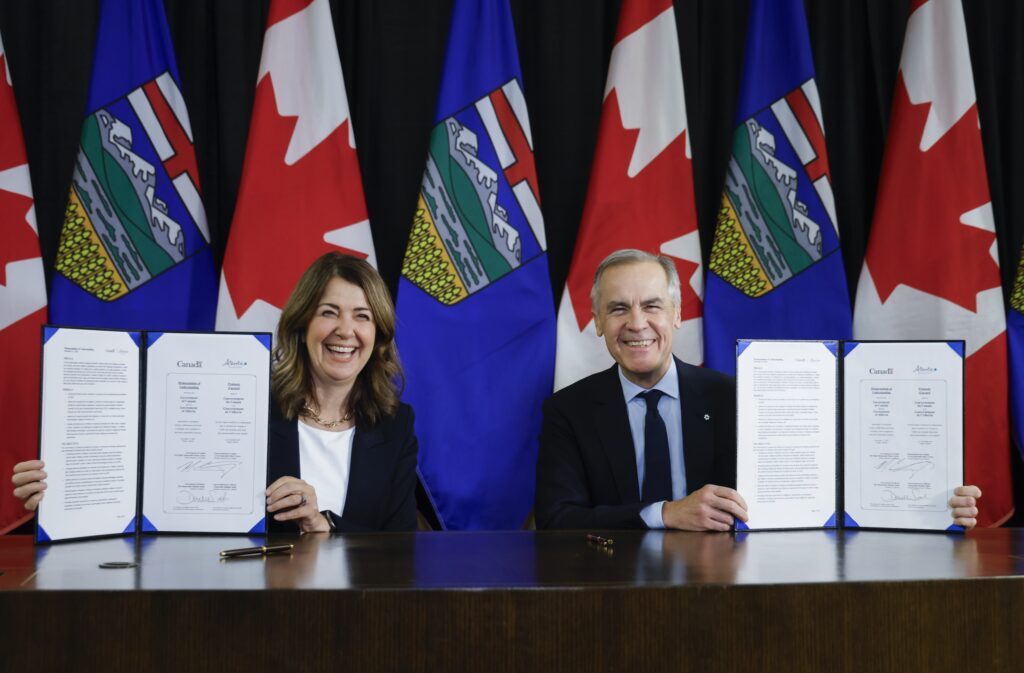
At a recent meeting of the Liberal caucus, Prime Minister Carney reportedly raised the spectre of Alberta separatism, framing the pipeline deal contained in the Canada-Alberta MOU signed last November 27 as not just as an economic win, but as a strategic necessity to keep the country together.
With the increasing likelihood of a referendum this year on the future of Alberta within the Canadian federation, this backgrounder explores the historical context of the separatism movement in the province and the issues that currently motivate it and describes the processes through which a separation referendum would be held. We also identify likely additional referenda resulting from the Alberta Next Panel, which tabled its first report in late 2025.
Historical antecedents
While independence movements that arise in democratic countries may find their ideological roots anywhere on the political spectrum, Alberta separatism has always been distinctly on the right of centre, populist in nature, and focused on the province’s autonomy and control over its natural resources.
The 1930s: Premier Aberhart vs the banks
Separatist demands first appeared in Alberta following the 1935 election of Williiam Aberhart and the Social Credit Party to govern the province. The new government passed legislation to tax banks, who it blamed for Depression-era debt collections and mortgage foreclosures on farms and businesses that were targeting the people of the province. The federal Liberal government of Mackenzie King used its jurisdiction over currency and banks to disallow Alberta’s legislation. Aberhart’s followers agitated for separation from Canada, but the idea failed to gain traction.
The 1980s: The National Energy Program
The notion of secession remained quiet until 1980 and the creation of the National Energy Program (NEP) by the federal Liberal government headed by Pierre Trudeau. The policy was prompted by two major oil shocks in 1973 and 1979, which caused global oil prices to skyrocket. To lower prices for consumers and ensure affordable energy prices throughout the country, the federal government used a complex system of taxes and subsidies to legislate domestic oil prices at well below world levels. As energy researcher Jesse Fuchs describes it, “From 1980 to 1984, the price of Canadian oil was held at half the global price while the federal government used its new share of profits from the oil industry in Alberta and Saskatchewan to subsidize oil imported for the rest of the country.”
The impacts of the NEP on Alberta were huge. Unemployment skyrocketed from 3.7% to 12.4%, and bankruptcies rose by 150%. Thousands of Albertans were unable to pay their home and business mortgages and the real estate market crashed. Alberta’s losses in tax revenue were estimated to be as much as $60 billion, all of which was “redistributed” to the benefit of Canadians outside the province.
Provincial autonomy over natural resources
While the Mulroney government ended the program in 1984, the NEP helped to catalyze a broader narrative in Alberta about provincial autonomy and control over natural resources that escalated and reached a fevered pitch during the ten years of Justin Trudeau’s government.
In fairness to Albertans, they had reason to feel aggrieved. In a 2017 town hall meeting in Peterborough, Justin Trudeau was asked about his government’s approval of pipelines and his commitment to the environment. He replied, “You can’t make a choice between what’s good for the environment and what’s good for the economy. We can’t shut down the oilsands tomorrow. We need to phase them out. (emphasis added) We need to manage the transition off of our dependence on fossil fuels.”
In 2018, the Trudeau government intervened to purchase and finance the twinning of the TMX pipeline from Alberta to Vancouver, which today significantly supports Alberta’s exports of bitumen to Asian markets. But throughout his time in office, Trudeau also acted aggressively on many fronts to restrain and force lower carbon emissions through fossil fuel production cuts and various net zero environmental requirements.
By the time Mark Carney became Prime Minister in 2025, Alberta Premier Danielle Smith had a list of nine specific demands aimed at reversing Trudeau era policies she argued were “throttling” Alberta’s economy. In an obvious reference to growing separatist sentiment in Alberta, Smith warned that failure to address the following issues within six months would lead to an “unprecedented national unity crisis“:
- Guaranteeing Alberta full access to unfettered oil and gas corridors to the north, east, and west.
- Repealing Bill C-69 (aka the “no new pipelines act”).
- Lifting the tanker ban off the B.C. coast.
- Eliminating the oil and gas emissions cap, which is a production cap.
- Scrapping the Clean Electricity Regulations.
- Ending the prohibition on single use plastics.
- Abandoning the net-zero car mandate.
- Returning oversight of the industrial carbon tax to the provinces.
- Halting the federal censorship of energy companies.
Most of Premier Smith’s nine complaints were removed or at least ameliorated by the MOU. An Innovative Research poll conducted immediately following its signing found that 54% of Albertans had a “mostly good” first impression of its contents and commitments.
Additional current irritants
These centre on Alberta’s place in the Canadian federation and are characterized by the views of many Albertans that their province is “unfairly treated” by current federal-provincial relationships and tax and transfer arrangements. A May 2025 Leger poll found that 62% of Albertans believe that people in other parts of Canada do not understand the reasons why some Albertans feel alienated from the rest of the country.
Disproportionate financial contributions
Many supporters of separation hold the view that Alberta has historically contributed disproportionately to Canada’s finances, sending far more tax money to Ottawa than it receives back through various transfer payments, including Equalization, Old Age Security, Canada Social Transfer payments and the Canada Pension Plan. As Lennie Kaplan, a former Alberta Treasury Board official recently wrote, “Between 2007 and 2023, Albertans paid $267.4 billion more to Ottawa than they received in return, according to Statistics Canada.”
Economists point out this imbalance stems from Alberta’s strong economy and profitable oil and gas industry, which produce higher incomes for its residents and higher corporate tax contributions from the province. Alberta also has a relatively young population with higher rates of employment. This results in more workers paying into national programs such as the Canada Pension Plan (CPP) and Employment Insurance (EI), fewer retirees drawing benefits compared to older provinces and relatively less poverty. As Professor Trevor Tombe of the University of Calgary argues, “But, rather than unequal federal policy, it’s Alberta’s strengths, such as higher incomes and a younger population – which means fewer CPP and OAS cheques flow to Alberta – that are widening its federal fiscal gap.”
Equalization
Another prevailing and deep-seated irritant is equalization, the federal transfer program that dates from 1957 to “ensure that provincial governments have sufficient revenues to provide reasonably comparable levels of public services at reasonably comparable levels of taxation.” Many people in Alberta resent the fact that while equalization payments are made to poorer provinces using federal tax dollars collected from Alberta, the province has not received a payment since 1964. As Jason Kenney, then the province’s premier, described the program, “For millions of Albertans, equalization has become the most powerful symbol of the unfairness for Alberta’s deal in confederation and for good reason.”
On October 18, 2021, a province-wide referendum was held in Alberta on whether equalization payments should be eliminated from the Constitution of Canada. Just under 62% of the voters agreed, while more than 38% voted “no”. In response, Prime Minister Trudeau called the referendum “incredibly political” and said the federal government could not reform equalization without consensus from the provinces.
Canada Pension Plan
Proponents of separation complain that Albertans pay far more into the Canada Pension Plan (CPP) than they receive, that in 2021 the province contributed 16.7% towards CPP but only received 10.8% of benefits. They argue that Alberta should withdraw from CPP and create its own Alberta Pension Plan offering the same benefits at lower costs while giving the province control over the investment fund.
In 2023, Premier Smith released an Alberta-commissioned report by LifeWorks, a human resources benefits company, entitled “Alberta Pension Plan – Analysis of Costs, Benefits, Risks and Considerations”. The report concluded that if it left the CPP, Alberta would be entitled to receive $334 billion in assets, representing approximately 53% of the CPP’s total base assets in 2023. This estimate was widely ridiculed by pension experts and some provinces. On Dec. 23, 2024, Canada’s chief actuary, Assia Billig, rejected the LifeWorks estimate and said that the province would instead be entitled to between 20 per cent and 25 per cent CPP’s assets, or roughly $140 billion.
A October 29, 2025, Leger poll found that a majority of Albertans remain firmly against the creation of a new Alberta Pension Plan: “60% of Albertans say they oppose the idea, up six points since May, while just over one in five (21%) express support, down eight points.”
The “Alberta Next” Panel
Premier Smith announced the creation of The Alberta Next Panel – with herself as chair – on June 24, 2025. The Panel has a mandate to:
“…listen to Albertans, engage experts, and make recommendations to the government on actions Alberta could undertake to enhance Alberta’s sovereignty within a united Canada. This includes recommendations on issues that should be put to Albertans in a referendum to take place in 2026.”
After holding 10 often raucous town hall meetings across the province, the panel released its first seven recommendations on December 19, 2025. The panel recommended that the province hold three referenda:
- On leaving the CPP and creating an Alberta Pension Plan.
- On Alberta exercising more control over immigration.
- On specific constitutional amendments aimed at protecting provincial powers from federal interference.
The Panel also suggested the Alberta establish an Alberta Police Service, complete a detailed cost-benefit analysis of taking over the collection of personal income taxes from the federal government, and work with other provinces and the federal government to reform equalization and fiscal federalism.
Alberta’s referendum process
Under its Citizen Initiative Act, Alberta has established a petition process that allows eligible voters to submit proposed legislative and policy changes and proposed constitutional referendum questions to the provincial government for consideration. In 2025, the government lowered the threshold to trigger a provincial referendum to 10% of the total votes cast in the most recent general election, specifically 177,732 signatures.
There are currently two ongoing petition processes underway in Alberta involving potential separation:
- Forever Canadian: This petition is led by Thomas Lukaszuk, a former United Conservative Party deputy premier, and supports Alberta remaining in Canada. It was launched to counter separatists who want a referendum on Alberta independence, and asked the question, “Do you agree that Alberta should remain in Canada?” During 2025, this petition attracted more than 456,000 signatures of support. Lukaszuk is actually not seeking a referendum, maintaining that his petition’s purpose is “to give the premier an opportunity to avoid a referendum and further divide Albertans along political lines.”
- Alberta Prosperity Project: Led by Mitch Sylvestre, who is also the president of a United Conservative Party (UCP) constituency association, this initiative seeks a referendum presenting the option of separation. On January 2, 2026, the Alberta Elections Officer approved the wording of the draft question “Do you agree that the Province of Alberta should cease to be a part of Canada to become an independent state?” Its proponents must now collect at least 177,732 signatures of support. The signature collection period is currently underway and will run for 120 days, from January 3 to May 2. If enough signatures are collected to approve the petition, Premier Smith would then set a date for the referendum, likely later this year.
What happens if a separation referendum passes?
The federal Clarity Act of 2000 outlines the processes and rules that apply in the case of a successful provincial separation referendum:
- A province does not have the authority to unilaterally secede from Canada.
- Any referendum question on secession must be clear and unambiguous, and the vote requires a “clear majority” – not just 50% + 1 – for the federal government to enter negotiations with a province.
- The House of Commons has the authority to determine whether these conditions have been met, and specifically whether there has been a “clear expression of a will by a clear majority of that province” to separate.
In the face of a positive referendum result, the negotiations between Alberta, the federal government and the other provinces would be difficult. Among the issues to be decided would be the division of federal assets and debt, currency, Indigenous treaty rights, as well as trade agreements and international treaties, to name just a few, and likely take some years to complete. (Alberta Prosperity Project spokespersons say an independent Alberta would continue to use the Canadian dollar as its currency.) Given the level of integration of Alberta’s economy with the rest of Canada, the negotiation process would result in uncertainty and economic turbulence.
The current state of play
Public opinion and Premier Smith
A Research Co. poll released on January 8, 2026, reported that compared to attitudes in June 2023, “Support for the idea of Alberta joining the United States increased by five points to 24%, while backing for outright independence went up by nine points to 31%”. The poll also found that “Agreement with Alberta’s separation from Canada rose to 40% among those who voted for the governing United Conservative Party (UCP) in 2023 (up 11 points), compared to just 11% among New Democratic Party (NDP) voters (up two points).”
On January 9, 2026, Pollara published the results of public opinion research on western Canadian attitudes to separatism and federal fairness. On Alberta separatism, the poll found that “Support is concentrated among provincial conservative voters – peaking at 40% among Alberta UCP supporters – while remaining minimal among Liberals, NDP voters, women, and seniors.”
These polls help to explain the Premier Smith’s predicament as she navigates between serving as premier and leading the UCP. As premier, she has said that she does not support separation, but she faces the reality that public support for provincial independence is overwhelmingly centred in her own party. This has led her to take steps to ease the way for success in the citizen petition process favouring a separation referendum.
First Nation dissent
Last month, the Sturgeon Lake Cree Nation launched legal action against the Alberta government calling for an injunction to block the petition allowing the independence petition to proceed, claiming that it violates the treaty between First Nations and the federal government.
Links between Alberta and Quebec separatists
As Andre Beland and Andre Lecours wrote last October in Policy Options, “In Alberta, as elsewhere in the country, Quebec is considered a “model” for provincial autonomy and political and territorial affirmation…More generally, Quebec is perceived as being at the forefront of the fight against centralization in the Canadian federal system, a very important issue in Alberta at the moment.” Last fall, Paul St-Pierre Plamondon, leader of the Parti Quebecois who has promised another referendum if he should win October’s Quebec election, went to Calgary to meet with Alberta Prosperity Project officials. He said that if he becomes premier and Alberta votes “yes”, he will recognize its independence.
Potential for U.S. mischief
The Alberta Prosperity Project claims that over the past year its representatives have made three trips to Washington to engage with the Trump administration, specifically, the U.S. State Department. Among the issues that have received “positive responses”, the APP says, include “U.S recognition of Alberta as an independent nation right after a successful referendum” and “a $500 billion line of credit … backed by the U.S. Treasury, to provide leverage in negotiations with Ottawa.” The leader of another separatist group, Cameron Davies of the Republican Party of Alberta, has visited Republicans at Mar-a-Lago “after meetings at the White with undersecretary-level officials” to “plant seeds” to grow support for Alberta independence.
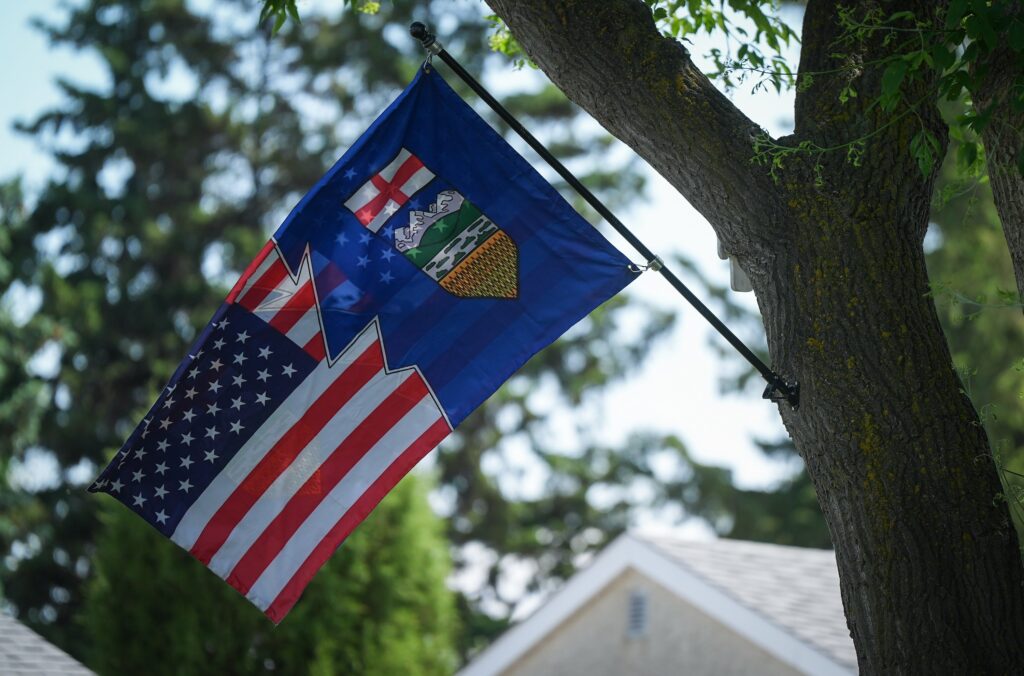
The seeds appear to be sprouting. While a handful of U.S. Republicans have previously commented positively on Alberta separatism, on January 22, U.S. Treasury Secretary Scott Bessent became the first Trump cabinet member to join in. “Alberta has a wealth of natural resources, but they won’t let them build a pipeline to the Pacific,” he said. “I think we should let them come down into the U.S., and Alberta’s a natural partner for the U.S. The Albertans are very independent people,” he continued. “There’s a rumour they may have a referendum on whether they want to stay in Canada or not”. Bessent was followed by Tennessee Congressman Andy Ogles who said, “I think the people of Alberta would agree with the sentiment that they would prefer not to be part of Canada and to be part of the United States because we are winning day in and day out”.
These comments have sparked concerns over whether Elections Alberta has the resources necessary to police possible foreign interference and keep foreign cash out of the coming separation referendum. Professor Shaun Fluker, a law professor at the University of Calgary, told the Globe and Mail, “I have real concerns, frankly, about the potential for there to be offside contributions into some of these Alberta separation referendum questions,”
Conclusion
In all likelihood, Alberta will hold a referendum on separation from Canada later this year. While the complaints of Albertans about the province’s place in the Canadian federation are widespread and deeply held in some quarters, separation is still a fringe movement that lacks the widespread public support the referendum would need to be successful.