
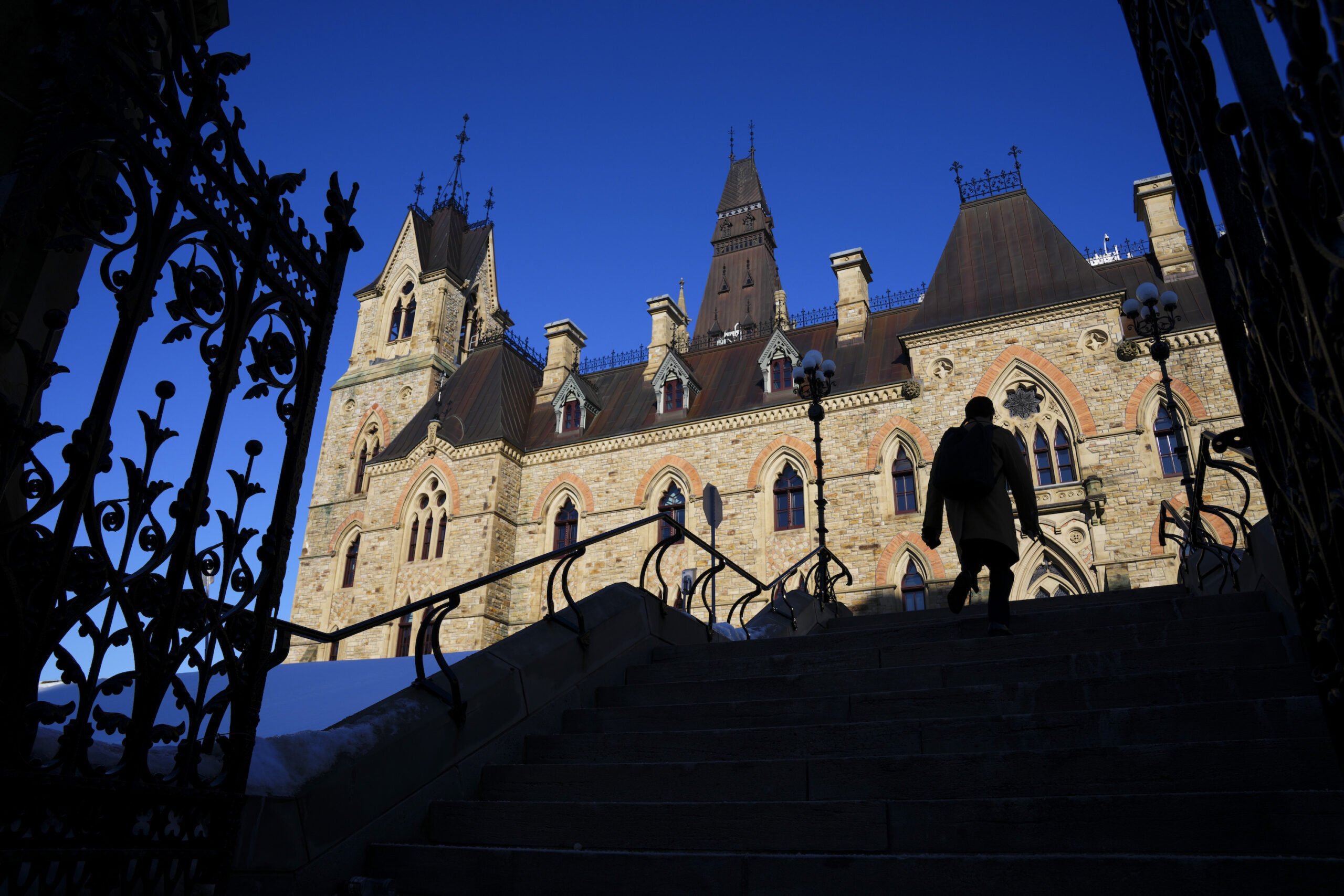
The House of Commons will resume sitting on Monday, January 26, and the Senate will sit again on February 3.
With the Canada-U.S. trade talks on hold, Prime Minister Carney used the holiday break to continue diversifying this country’s trade relationships away from the United States. On the trip to China, the two countries settled the bilateral dispute that has seen that country levy 85% tariffs on Canadian canola, and 25% tariffs on pork and seafood over Canada’s blocking entry of China’s electric vehicles. After announcing the deal, senior ministers said the federal government would shortly announce a support package for the Canadian auto industry.
In Qatar, Carney launched negotiations on a new Investment Promotion and Protection Agreement focused on military, security and defence matters, and Qatar committed to make significant strategic investments in Canada’s nation-building projects. In February, the PM will travel to India for more trade diversification negotiations.
The PM ended his travels this week in Davos, where he delivered a stark speech that called for middle powers to build their own multilateralism in the face a new era in which great powers prey on smaller countries to take what they want. In this new reality, he said,
Great powers have begun using economic integration as weapons, tariffs as leverage, financial infrastructure as coercion, supply chains as vulnerabilities to be exploited. Middle powers must act together because if we’re not at the table, we’re on the menu.
The principal domestic developments during the holiday break were focused on the federal public service, where thousands of employees have been sent workforce adjustment notices, informing them that their jobs may be impacted. After the House rose in December, the Prime Minister also shuffled several key deputy ministers, including the deputies at the Privy Council Office, Finance Canada, National Defence and Justice.
Finally, former finance minister and deputy prime minister Chrystia Freeland resigned her seat in early January after being appointed as a senior advisor to Ukrainian President Volodymyr Zelenskyy. This means Prime Minister Carney must call a by-election to replace her within the next six months.
The Prime Minister’s speech to Canadians
Speaking after a whirlwind trade diversification world tour and his Davos speech that struck admiring chords around the world, the Prime Minister bridged back to pressing domestic concerns, laying out his priorities for the coming Parliamentary session including:
- Better economic co-operation with the provinces and territories
- Widening the net for international trade deals
- Reforming the criminal justice system
- Fostering artificial intelligence
- Making massive investments in defence.
Carney also promised to protect services like childcare, dental care and pharmacare, and stand up for the vulnerable “whether they are a newcomer, a person with a disability or a member of the 2SLGBTQI+ community.” In a nod to critics who argue that speed is of the essence, he said, “Now we need to execute. Fairly. And Fast”.
Carney was speaking in Quebec at the start of a pre-session cabinet retreat.
The national economy
Canada’s economy continues to show mixed signals with recent signs of a modest recovery, including a strong Q3 2025 GDP rebound to 2.6% annualized growth after earlier contraction. The inflation rate was 2.4% in December 2025, slightly up from previous months, with the cost of groceries leading the way, jumping by 6.2% from December 2024 to December 2025. Unemployment rose to 6.8% in December 2025 from 6.5% in the previous month, indicating a softening job market.
Cars, canola, pork and seafood
The deal that Carney reached with the Chinese was welcomed by many Canadian stakeholders particularly in the Prairies and on the East Coast:
- By March 1, China will lower tariffs on Canadian canola seed to a combined rate of approximately 15%, and lift completely its tariffs on Canadian canola meal, pork, lobsters, crabs, and peas. Canola exports to China are worth $4 billion per year to Canada.
- Canada will allow entry to up to 49,000 Chinese electric vehicles (EV) into the Canadian market, with the most-favoured-nation tariff rate of 6.1%, and accounting for less than 3% of the Canadian auto market. This arrangement virtually recreates the status quo that existed in 2023, when slightly fewer Chinese EVs were allowed into Canada at the same tariff rate.
Ontario Premier Doug Ford criticized the deal, as well as Brian Kingston, President of the Canadian Vehicle Manufacturers’ Association, Flavio Volpe, President of the Automotive Parts Manufacturers’ Association and Lana Payne, President of Unifor. Ford claimed the deal with China favours foreign “spy vehicles” over well-paid provincial jobs and that Chinese manufacturers will “never” open auto manufacturing facilities in Ontario. He called on Canadians to boycott Chinese-made electric vehicles when they are allowed back into the country under the new deal.
While Saskatchewan Premier Scott Moe, who accompanied the Prime Minister to China, praised the deal expressing how important Canadian agriculture is to the country’s economic growth, and also the large role it plays in the global market.
Trump, Greenland and NATO
Speaking in Davos, President Trump said after a meeting with NATO Secretary-General Mark Rutte that they had “formed the framework of a future deal with respect to Greenland.” As a result, he said he will not go ahead with an additional 10-per-cent tariff on NATO countries on February 1 as planned and will not use military force to take Greenland from Denmark. While these commitments lowered the temperature on the crisis, the deal still must be negotiated. Canada also faces a decision on whether to join the NATO military presence on the island to show solidarity with Denmark.
Trump’s “Board of Peace”
On January 21, President Trump withdrew his previous invitation to the Prime Minister to join his “Board of Peace” initiative for Gaza. PM Carney initially expressed an openness to joining the other nations but later took a more careful approach, saying there were still many unanswered questions about the board’s purpose, structure and the permanent membership fee of $1 billion. It remains unclear how many nations received an invitation to join the group, however at this time it appears Canada is the only country to have its invite rescinded.
Managing the House of Commons
Little progress was made on the government’s legislative agenda in the House during the fall sitting. Given the party standings that resulted from the April election, the Liberals do not have a formal ally to help enforce their command of the House, and as a result, do not have the ability to shut down debate on bills to move them along through the legislative process. In the last Parliament, this role was played by the NDP through the Supply and Confidence Agreement, but now, the NDP does not have official party status and does not have committee membership. This has also meant the government lacks a majority over important Conservative Chaired committees, which has proven to be an even more hinderance to the legislative agenda than maybe thought before.
As a result of this impasse, consideration of Budget 2025 (Bill C-15, The Budget Implementation Act #1) was stalled in the House until the final day of the fall sitting when it was finally referred to committee for detailed study.
As a result, there will be a delay in the launch of the early-retirement buyout incentives for public servants because the program is subject to approval of the budget bill.
The numbers stalemate among the parties in the House is about to become more complicated. After Chrystia Freeland’s resignation, the Liberals now are two seats short of a majority, but Conservative MP Matt Jeneroux has said he will resign at some point this winter. There are also senior diplomatic appointments pending with former Liberal ministers waiting to take them. While there is always the possibility of additional opposition party defections to the Liberals, the Prime Minister will have to call a byelection to replace Freeland in the coming months.
Finally, even if the Liberals do achieve a majority through additional floor-crossings, House rules and procedures prevent them from acting unitarily to change the committee make-up to reflect the new reality without proroguing the House and starting a new session entirely. That makes another election a distinct possibility. Whether it is triggered by the government or opposition parties would depend on House of Commons math, but also in part on the parties’ confidence in their ability to assert their preferred ballot question. As our polling below suggests, an unstable international landscape that drives public attention towards trade and Canadian sovereignty likely favours the government, while a shift towards cost of living concerns could advantage the opposition parties.
Looking ahead
- Conservative Leader Pierre Poilievre faces his party’s verdict on his leadership on January 29-31 at the Calgary convention. He is expected to be reconfirmed with a comfortable majority.
- The NDP leadership contest continues onward, working towards a convention to be held in Winnipeg March 27-29.
- In Quebec, after the recent resignations of Premier Francois Legault of the ruling Coalition avenir Quebec, the CAQ announced this week that his successor will be elected on April 12. Liberal Leader Pablo Rodriguez also recently resigned, but the party is yet to announce the details of its leadership contest.
- In Alberta, a separation referendum appears likely later this year, after the Alberta Elections Officer approved the wording of the draft question “Do you agree that the Province of Alberta should cease to be a part of Canada to become an independent state?”
Public opinion snapshot
Amid the intensity of international events, we wanted to step outside the news bubble and better understand what Canadians think their government should prioritize this year. We asked Canadians, using Earnscliffe’s omnibus survey, which priorities Mark Carney’s government should focus on and how much progress his government has made on those issues to date.
Most often selected is the cost of living (57%), the runaway top issue of those we presented to respondents. If you’ve been following Canadian public opinion for the past few years, this should come as no surprise. But what is perhaps more unique is the priority assigned to expanding trade relationships (36%), virtually tied with shortening wait times for healthcare (38%), a perennial issue in Canadian public opinion. Notably, expanding trade relationships is a far greater priority than getting a deal with U.S. President Donald Trump on trade (16%). In fact, issues like defending Canada’s sovereignty (27%), reducing government spending (22%), and building major projects (21%) rank ahead of a deal with the U.S.
In your opinion, which of the following are the most important issues that Mark Carney’s government should focus on in 2026? Please select up to three.

As we wrote back in November, Canadians seem willing to give the government some leeway when it comes to President Trump, recognizing the unpredictability of the partner they’re working with. Expanding Canada’s relationships abroad may seem like a more practical approach. Disruption on the international stage gives the Prime Minister the opportunity to play to his greatest strengths as a steady hand in chaotic times, and his efforts to date have paid off: over half (61%) who say international trade relationships are a top priority for them think the government has made at least some progress in this area.
And would you say that Mark Carney’s government is making any progress on those issues?
Use a scale from 1-7 where 1 means it has made no progress and 7 means it has made a lot of progress.

But as the House returns, the government will be forced to contend more directly with domestic issues on which they’ve struggled to deliver. Chief among these is the cost of living. Among the over half of Canadians who say this should be a top priority for the government, very few (just 9%) believe the government has made progress. With polling aggregators like 338Canada showing a slight tightening in vote intention and seat projections, it’s a factor to watch closely. A disciplined opposition party would be smart to make it their focus.
About the research
The Earnscliffe Omni offers fast, actionable insights which help you make data-backed decisions without the longer timeframes or complexity of custom research. Offering nationally representative data at a compelling price point, the Earnscliffe Omni is the answer to your research needs.
The survey, conducted by Earnscliffe Strategies’ opinion research team, was in field from January 8-11, 2026, and engaged a representative stratified sample of 2,019 respondents living in Canada aged 18 years or older (with an effective national sample size of 1,872) who are members of Leger’s LEO panel. Respondents had the option of completing the survey in French or English. For comparison purposes only, a probability sample of this size would have a margin of error of +/- 2.18 at a confidence level of 95%.
Results were weighted according to age, gender and region based on Census 2021 data to ensure a representative sample of the Canadian population.
Earnscliffe Strategies a member of the Canadian Research Insights Council (CRIC), and this research was conducted in compliance with CRIC standards.
For more select findings from this research, please see the data tables or contact hmartin@earnscliffe.ca