

The House of Commons ended its fall sitting on December 11 and will return on January 26, 2026, and the Senate will sit again on February 3.
Ambition and vision meet reality
A government’s success is generally measured first by its ambition and vision during an election and then its ability to ultimately deliver on those promises. Political agendas tend to be incremental in scope, focusing on key target areas that are guided by the party’s policy preferences and public opinion. When Prime Minister Mark Carney first set out his vision for what his government would achieve, the domestic economy, the U.S. tariff imposition and the minority Parliament meant he has not been afforded the ability to operate in a traditionally incremental fashion. From the outset, he outlined a fundamental restructuring of Canada’s economic interests, policies and place in the world. But has he delivered?
If we look at this government’s record strictly through the lens of parliamentary progress this fall, the reality has turned out to be a government constrained by process, as opposed to ambition. With no formal partner in the Commons, the Liberals have been unable to shut down debates to move bills through the legislative process. As a result, the Budget Implementation Act, a major centrepiece bill, was delayed in being sent to committee until just before the House rose, a victim of opposition go-slow tactics.
Moving closer to a majority
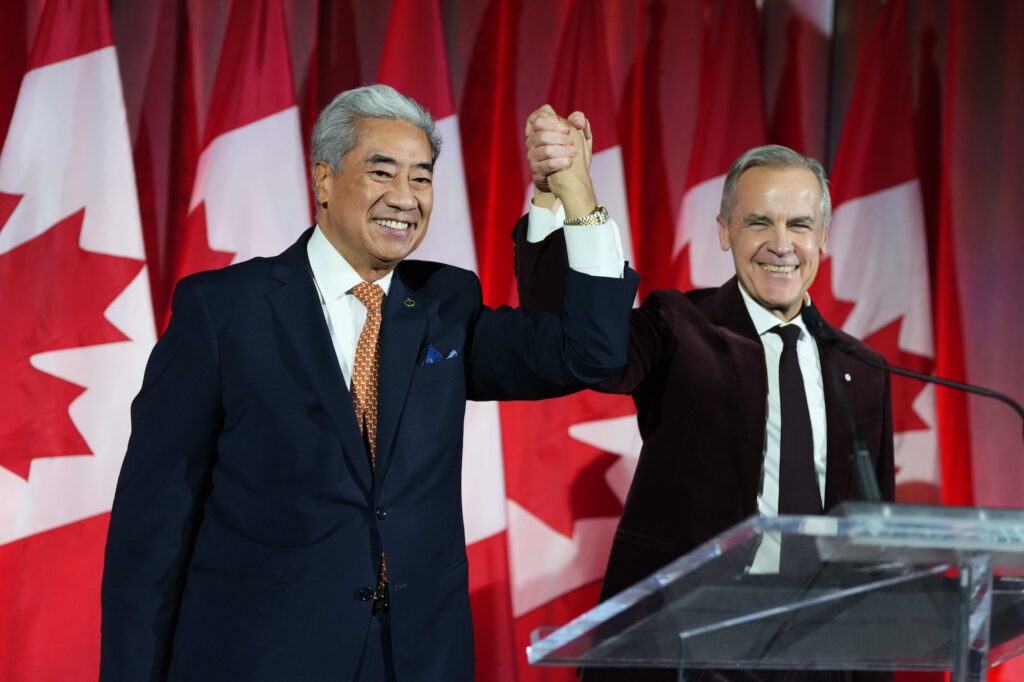
PM Carney’s government now suddenly sits tantalizingly close to a majority. Following Chris d’Entremont’s floor crossing earlier in the session, and Markham—Unionville Conservative Michael Ma announcing he was joining the Liberals just hours after the House rose for the holidays, the Liberals now sit at 171 seats, one short of the magic 172 number. To complicate matters more—at least for the opposition—Conservative MP Matt Jeneroux earlier announced his impending resignation from his seat in Edmonton Riverbend and has thus far not voted on budgetary matters, essentially offering Mr. Carney a functional majority. If Mr. Jeneroux continues to abstain, the government will survive confidence votes.
That might also help to clear the logjam of legislation in the House, although the current rules would still give the opposition parties majorities in committees. If they are still bent on obstruction, as the government charges, the problem will persist.
An ambitious change agenda
A review of the government’s accomplishments outside the legislative process presents a better tally of its truly ambitious agenda. This shift has produced a period that is more activist than the legislative record suggests, defined by efforts to recalibrate federal priorities, challenge long-standing government policy positions and prepare for long-term structural challenges facing the country.
These structural changes begin with government processes themselves, as the PM attempts to circumvent what he views as inefficient bureaucratic decision-making by establishing arm’s-length agencies with one purpose: expediting delivery of projects within their purview. This approach is informed by the PM’s private-sector experience, bringing in additional leaders from the private sector to head these new institutions. Build Canada Homes, the Canadian Defence Investment Agency and the Major Projects Office are some of the most prominent of these institutions, and they are busy finding their feet and staffing their offices. Like the government itself has benefitted, the ambitious goals of these offices have allowed some leeway in public opinion as they find that footing, but the questions surrounding their ability to deliver have already begun, and progress will need to be visible and continuing to keep the public onside.
To this end, aside from the human-resource limitations of establishing a whole new cabinet, this sitting has been marked by the Carney government’s attempts to differentiate itself from the Trudeau Liberals. The Prime Minister has repositioned several major policy files, with climate policy being the most visible realignment. The government’s revised approach, which moves away from regulation and towards creating an environment conducive for business to invest in clean technology, has prompted internal debate and ultimately resulted in the resignation of former minister Stephen Guilbeault after the signing of the Memorandum of Understanding with Alberta. The MoU includes some significant Trudeau-era policy reversals such as suspending the Clean Electricity Regulations for Alberta, allowing oil-recovery projects to be considered under the Investment Tax Credit regime, as well as backing away from implementing an emissions cap on oil and gas production. The largest change has been the government’s willingness to revise the tanker ban off BC’s northern coast, which will pit Ottawa against the BC NDP government and some coastal First Nations.
At the same time, broader industrial and geopolitical considerations have taken on renewed emphasis. The government’s Defence Industrial Strategy reflects this shift toward long-horizon planning. It aims to diversify defence partnerships and adapt to a global landscape in which long-assumed elements of U.S. leadership are increasingly subject to uncertainty. It also is designed to meet the NATO requirements for national defence spending. The strategy illustrates a broader effort to position Canada as a reliable partner amid quickly changing international trade and security dynamics.
More diversified international engagement
In a recent opinion piece that the Prime Minister published in The Economist, he lays out his vision for repositioning Canada in the global context. The government appears to be moving toward a model of middle-power engagement that blends work through traditional alliances with participation in new, issue-specific coalitions. In the Prime Minister’s framing, “a new web of ad hoc co-operation” is emerging globally, anchored in shared interests rather than shared institutions. This has led to a number of different negotiations and agreements, including energy, security and critical mineral partnerships with Sweden, Germany, Poland and other European nations, as well as partners in the South Pacific and ASEAN countries. Most recently, Canada launched negotiations toward Canada’s participation in Security Action for Europe (SAFE) after signing a Security and Defence Partnership with the European Union (EU) earlier this year. This marks a clear departure from the historical expectation that Canada’s foreign-policy centre of gravity will consistently align with predictable U.S. positions. The assertion that “nostalgia is not a strategy” points to an understanding that future stability will require more diversified forms of engagement. The PM put it this way:
To re-establish resilience, a new web of ad hoc co-operation is beginning to emerge. We are entering an era of ‘variable geometry’ characterised by dynamic, overlapping, pragmatic coalitions, built around shared interests, and occasionally shared values, rather than shared institutions.
While the PM looks abroad for economic diversification, the ongoing trade dispute and continued threats of additional tariffs on various key sectors by the U.S. President hang like a dark cloud. The government is consistently faced with new threats, the most recent being suggestions that the U.S. administration could consider the termination of CUSMA in exchange for separate deals with Canada and Mexico. We continue to see the economic consequences of this uncertainty and the prolonged tensions, with layoffs in key sectors such as forestry, steel, aluminium and the automotive sector more broadly. The government has had to act swiftly to support these sectors, providing billions in funding and loans to keep these hard-hit sectors operating, taking up much-needed fiscal room as the government also looks to balance its promised fiscal management. The government has also made attracting foreign direct investment a major priority. The PM has forecast the likelihood of attracting one trillion dollars in FDI, while his Natural Resources minister Tim Hodgson says he is mandated to raise half of that.
Conclusion
While there is no doubt that the government has, in many cases outside of the legislative process, been delivering on large and ambitious structural changes in the global context, these developments are unfolding against a broader economic backdrop that seriously hits Canadians on a basic level—the impact of rising prices on their pocketbooks. Statistics Canada reported on December 15 that while inflation remained steady at 2.2% in November, grocery prices rose 4.7% year-over-year in November, a jump up from 3.4% in October and the highest level recorded since December 2023. Recent polling shows that nearly 65% of Canadians feel worn down by the effort it has taken to keep up with the cost of living this year. Given the uncertainty caused by trade tensions with the U.S., the Prime Minister has been afforded a certain degree of leeway trying to navigate these “unprecedented times”. However, unless the PM manages to convince someone else to cross the floor, the minority parliament may reach its end earlier than the normal length of a mandate. The PM may well decide he cannot fully implement his agenda without a majority and may decide to ask Canadians for one.
Opposition watch
The Conservatives
After the 2025 election, Conservative leader Pierre Poilievre became somewhat a victim of the expectations he had set in the preceding months. (A year ago today, the national polls had the Conservatives at 44%, the Liberals at 21% and the NDP at 19%.) Nevertheless, the Conservative share of the vote in the election was their highest share since 1988. Despite losing his own seat in his long-held riding of Carleton, Poilievre had no trouble winning a seat in Alberta in a by-election after Battle River–Crowfoot MP Damien Kurek stepped aside to allow him to run.
Winning a seat there didn’t just get Poilievre back in the Commons as Leader of the Official Opposition, it helped galvanize support in the movement he helped build within the party. He faces a test of that support in a leadership review in January. Aside from some small but vocal pockets who point to the loss of a 20-point lead and insufficient pivoting during the election campaign, it appears that most Conservatives remain either unshakable in their support or sufficiently convinced there is no suitable successor ready yet in the wings. There is no public evidence yet that the two defections and Jeneroux’s departure have made a difference to that. Speculation on more crossings had somewhat dissipated until Markham–Unionville Conservative MP Michael Ma also crossed to the Liberals this week. And most delegate selection meetings for the January review happened in October and November.
While the Conservatives remain in a statistical tie with the Liberals, Poilievre’s greatest challenge going into his leadership vote next month is the 28 point lead that Mark Carney holds over him as preferred Prime Minister.
The NDP
The federal NDP has struggled to take up space this fall as they continue to manage without party status or representation on any committees, and as they go through a leadership race that will conclude at the end of March. The caucus has mostly been working independently on issues that matter to the constituents they represent, while interim leader Don Davies takes on a broader mandate.
When the Prime Minister and the Liberal government needed votes to pass the introduction of their fall budget, the Prime Minister’s Office decided not to pursue the NDP for support. As a result, the NDP caucus chose to either vote against the budget or abstain in order to not have a federal election but stated clearly in their budget response that the government was not interested in working with the NDP on their priorities, and in turn, the NDP was not interested in supporting the government. This positioning is expected to continue, particularly until the new leader is elected at the end of March.
On the leadership, there are five candidates running to be the next leader: Rob Ashton, Tanille Johnston, Avi Lewis, Heather McPherson and Tony McQuail, with the three front runners considered to be B.C. labour leader Ashton, B.C. environment activist Lewis and Alberta MP McPherson. Following the first leadership debate in Montreal, the contestants have been focused on signing up members and travelling the country to build support.
Upcoming key dates for the leadership are December 30, 2025 and January 28, 2026 for the final leadership payments. The membership cutoff date is also January 28, 2026. Late February in the Lower Mainland in B.C. will be the second leadership debate in English and the next leader of the party will be chosen at the party’s convention in Winnipeg March 27–29, 2026.